
Service · Architectural visualisation
Architectural imagery, house to high-rise.
Photoreal visualisation for housebuilders, architects, and developers. Every project type, every scale — from a single dwelling to a masterplan with airports and hospitals on the same site. CGI built. AI finished. Indistinguishable from photography.
For
Housebuilders · Architects · Developers
scale
Single building to full masterplan
output
Stills · animation · planning sets

Mixed-use development · Three-tower scheme · Planning visualisation
What it is
Photoreal architectural imagery, end to end.
We illustrate buildings, schemes, and landscapes at any scale — single houses through to developments containing airports, hospitals, and public infrastructure. Each project is built in CGI for accuracy and control, then finished with AI for photographic realism.
The result reads as photography. Planning panels, marketing brochures, sales suite displays, investor decks, hoardings, websites — same scene, every output. We work from CAD, drawings, sketches, or — at the early-stage end — a written description and a site location.
the standard
If it doesn’t pass as a photograph, it doesn’t leave the studio.
Every image is checked against three questions: would a planner believe this is built, would a buyer believe this is real, would a competitor believe a photographer made it. If any answer is no — the image goes back into production.
project types
From a single dwelling to a development with its own infrastructure.

01
Houses & residential
Show homes, plot types, individual dwellings, infill schemes.

02
Apartments & high-rise
Mid-rise blocks through to thirty-storey towers and above.

03
Commercial & mixed-use
Offices, retail, hotels, leisure, mixed-use schemes.

04
Masterplans & developments
Phased schemes, urban quarters, multi-plot developments.

05
Infrastructure
Airports, hospitals, transport, civic and public infrastructure.

06
Landscapes & public realm
Streetscapes, parks, plazas, masterplan landscape elements.
Who it’s for
Built for the people who commission visualisation.
Three buyer profiles. Each comes with different priorities, different timelines, and a different definition of what “good” looks like. We work to all three.
01
Housebuilders
Show home imagery, plot type illustrations, sales brochure suites, hoarding panels, sales suite displays. Same plot rendered across every elevation, every spec, every option.
02
Architects
Planning visualisations, competition entries, client presentation imagery, marketing for completed projects. Imagery that holds up in front of a planning committee and a magazine art director.
03
Developers
Investor decks, off-plan sales material, planning submissions, masterplan flythroughs, marketing suites, hoardings. Imagery that helps a scheme sell, fund, and get approved.
Commercial advantage
Why CGI beats waiting for the building.
For architectural work the maths is even more straightforward than for product visualisation: the building doesn’t exist yet. There is nothing to photograph.
→
Sell off-plan with confidence
Buyers and investors see exactly what they’re committing to. Material specs, light at different times of day, view from the balcony — modelled to specification.
→
Submit planning material that passes the credibility test
Photoreal context views, accurate massing, real materials, true-to-site landscape. The kind of imagery a planning committee takes seriously.
→
One scene, every output
Hoardings, website, brochure, app, planning panel, investor deck. Same model, output to every spec — no reshoots, no rebuilds.
24
Years in commercial CGI
6
Project type categories
100s
Assets delivered per campaign
CGI + AI · How architectural images are made here
CGI builds the geometry. AI finishes the photograph.
Two disciplines, one image. The CGI gives us accuracy, control, and the ability to change anything. The AI layer gives us the photographic finish that planning committees and buyers respond to.
Step 01
CGI build
Architectural model built from CAD, drawings, or sketches. Real materials, accurate geometry, true site context. Every window, every brick course, every level — modelled to spec.
What this gives you · Accuracy & control
Step 02
AI enhancement
The CGI render is taken into AI for finishing. Light becomes more natural, materials gain real-world depth, the image stops looking computed and starts looking captured.
What this gives you · Photographic realism
Step 03
Final image
An image indistinguishable from photography. Use it on planning panels, in brochures, on hoardings, on the website, in the investor pack. One image. Every output.
What this gives you · Outputs that pass as photographs
The point
24 years of CGI craft is what makes the AI layer credible. AI on its own gives you imagery with tells. CGI underneath gives the AI accurate geometry, accurate light, accurate materials to work from. That is why the output reads as a photograph.
selected architectural work
A few examples of images from our architectural archives.

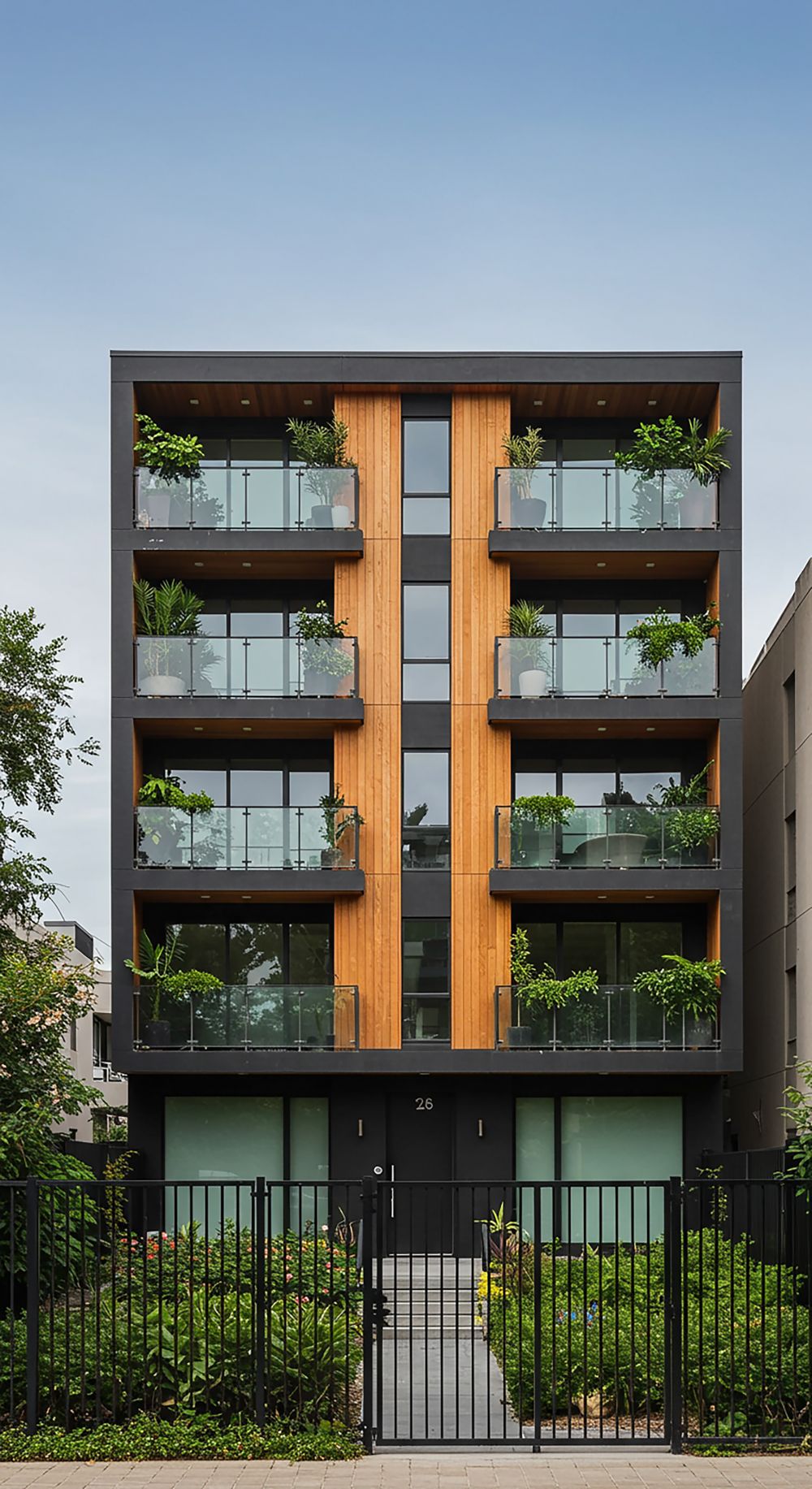


from a satisfied architectural client
Proof, not promises.
Common questions
Things architects, housebuilders, and developers ask first.
Six questions that come up in nearly every first conversation. If yours isn’t here, ask.
Start an architectural project
New scheme to visualise?
Planning set to put together?
Send us what you have — CAD, drawings, a sketch, or a written brief. We’ll come back with a quote and a timeline within two working days.